INTEK is a highly specialized laboratory offering advanced testing and measurement services to ensure safety, quality, and compliance across major industrial sectors.
The safety and reliability of electrical, electronic, and mechatronic products are crucial in all application sectors. From civil infrastructure to railway systems, from industrial equipment to internal combustion or electric vehicles, every technology must demonstrate compliance with European directives, international standards, and the specific requirements of various markets.
INTEK, an independent laboratory founded in 1994, has been operating for over thirty years as a national reference for electrical/electronic, environmental, physical, electromagnetic compatibility, and radio emission testing, as well as for applied metrology and the calculation of measurement uncertainty. The sectors in which it operates include consumer, industrial, sensors, automation, ATEX, marine, automotive, and rail.
The role of a laboratory like INTEK is now essential for:

Safety testing of household products to ensure compliance with European directives.

Qualification of complex industrial systems to ensure reliability in harsh environments.

Testing of marine technologies to withstand extreme environmental conditions.

Testing of onboard electronics to ensure safety and compliance with global regulations.

Validation of railway equipment according to rigorous standards to withstand impacts and stresses.

The civil sector includes electrical and electronic equipment for domestic, residential, commercial, and tertiary use. The most critical aspects concern electrical safety, electromagnetic compatibility, and exposure to electromagnetic fields.





| Feature | Advantages | Technical complexities |
| Electrical safety | Ensures LVD compliance and safe use | Very detailed standards |
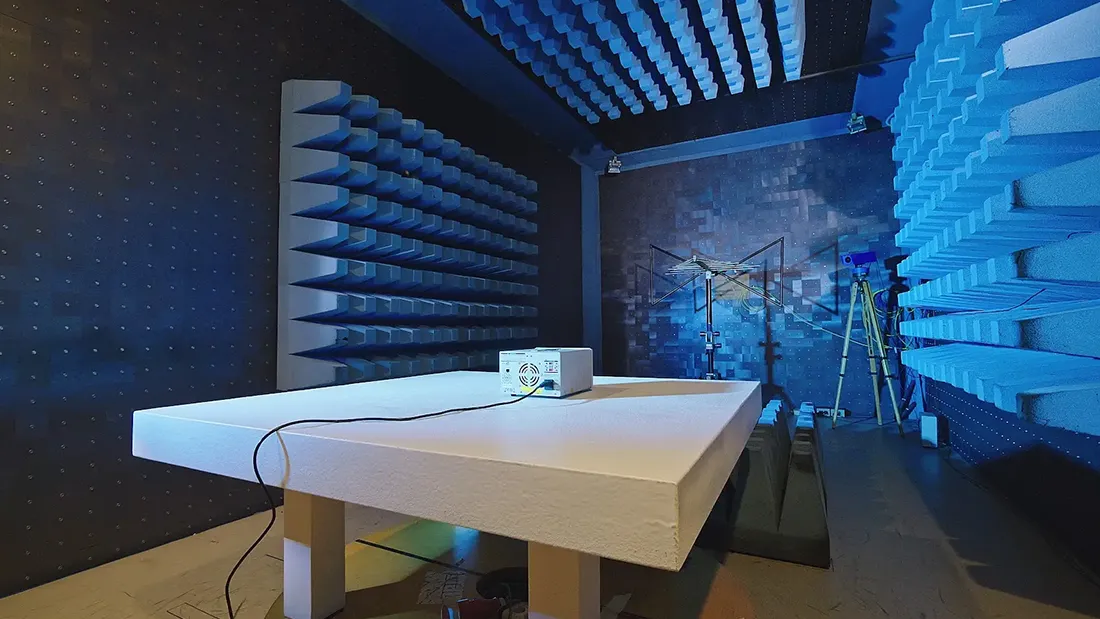
| EMC | Prevents interference with household appliances and sensors | Requires shielded chambers and dedicated instrumentation |
| Environmental testing | Assess durability and potential failures | Longer test times |
The INTEK test protocol is designed to provide objective evidence of product safety, specifically verifying:

The industrial sector requires robust, safe equipment that complies with European directives, with particular attention to electromagnetic compatibility, operational continuity, and automation systems.



| Feature | Advantages | Technical complexities |
| Low-voltage testing on industrial equipment | Broad regulatory coverage | Complex and variable testing according to specifications |
| Industrial EMC | Higher immunity levels → greater reliability | Requires advanced instrumentation |
| Vibration and shock | Reproduce real-world stresses | Complex setups for test fixtures |
Technical validation in the industrial sector aims to confirm the robustness of power and control systems by verifying:

Equipment intended for the marine sector must withstand extreme environmental conditions and meet strict requirements for vibration, shock, and electromagnetic compatibility according to organizations such as RINA, Lloyd’s Register, and DNV.

| Caratteristica | Value | Technical complexities |
| Marine EMC testing | Essential for onboard systems | Require dedicated anechoic chambers |
| Vibration testing | Simulate harsh operating conditions | Stringent parameters to be maintained |
| Salt fog | Evaluate durability in corrosive environments | Long cycles |
Marine service tests are designed to meet the requirements of classification societies, determining through rigorous testing:

The railway market requires very specific testing, particularly for vibration, shock, electromagnetic compatibility, and functional safety. It is a highly regulated sector, with testing based on standards such as EN 50155, EN 50121, and EN 61373.
| Features | Advantages | Technical complexities |
| Railway vibration testing | Accurate reproduction of dynamic loads | Complex setup, long test durations |
| Railway EMC | Ensures compatibility with onboard systems | Requires specialized regulatory expertise |
Objectives of the verification process and compliance requirements:

The automotive sector has stringent requirements for emissions, immunity, conducted transients, and testing of vehicle electrical/electronic equipment. INTEK is also an accredited laboratory for testing according to UN ECE regulations.




| Area | Advantages | Technical complexities |
| Automotive EMC | Accurate reproduction of vehicle conditions | Requires specialized environments |
| Conducted disturbance testing | Identifies early vulnerabilities | Requires advanced expertise |
| Testing of critical components | Improves functional safety | Setup varies by vehicle |
The testing process for in-vehicle electronics focuses on compliance with certification standards, verifying precisely:
General tests (e.g., general EMC or basic climatic tests) evaluate cross-cutting requirements. Sector-specific tests apply specific levels, methods, and criteria (e.g., railway shock, marine salt fog, automotive transients).
Many markets (marine, railway, automotive) require standards not included in CE marking but mandatory for the actual use of the product.
Yes, INTEK provides preliminary analysis, normative support, and customized test plans.
News