
In today’s technological landscape, the integration of wireless communication modules has become an essential feature for a wide range of products, from industrial devices to everyday objects (IoT). Radio testing aims to ensure that such equipment uses the radio frequency spectrum efficiently, avoiding harmful interference and ensuring coexistence with other services and devices. Compliance with the RED Directive (2014/53/EU) is the fundamental requirement for placing any product with transceiver capabilities on the European single market.

INTEK S.p.A., an independent testing and measurement laboratory founded in 1994 and headquartered in Rezzato (BS), is a center of excellence in the validation of radio technologies. Thanks to ACCREDIA (No. 00855) accreditation and active participation in CEI technical committees, INTEK offers specialized support for the qualification of Short Range Devices (SRDs), broadband systems, and integrated equipment. Our metrological expertise ensures accurate and traceable measurements, which are essential for supporting the presumption of conformity and the issuance of the Test Reports required for CE marking.
The validation of a radio device requires an analytical approach that covers not only purely transmission-related aspects but also electrical safety and electromagnetic compatibility specific to radio modules. In our laboratories, equipment undergoes rigorous testing to verify critical parameters such as output power, occupied bandwidth, spurious emissions, and receiver sensitivity. This process ensures that the device operates within legal limits, preserving the integrity of communication networks. For manufacturers, relying on professional experimental validation means reducing the risk of penalties and ensuring superior radio signal reliability in real-world operating environments.
For products intended for use in potentially explosive atmospheres, INTEK is able to conduct tests for ATEX certification.
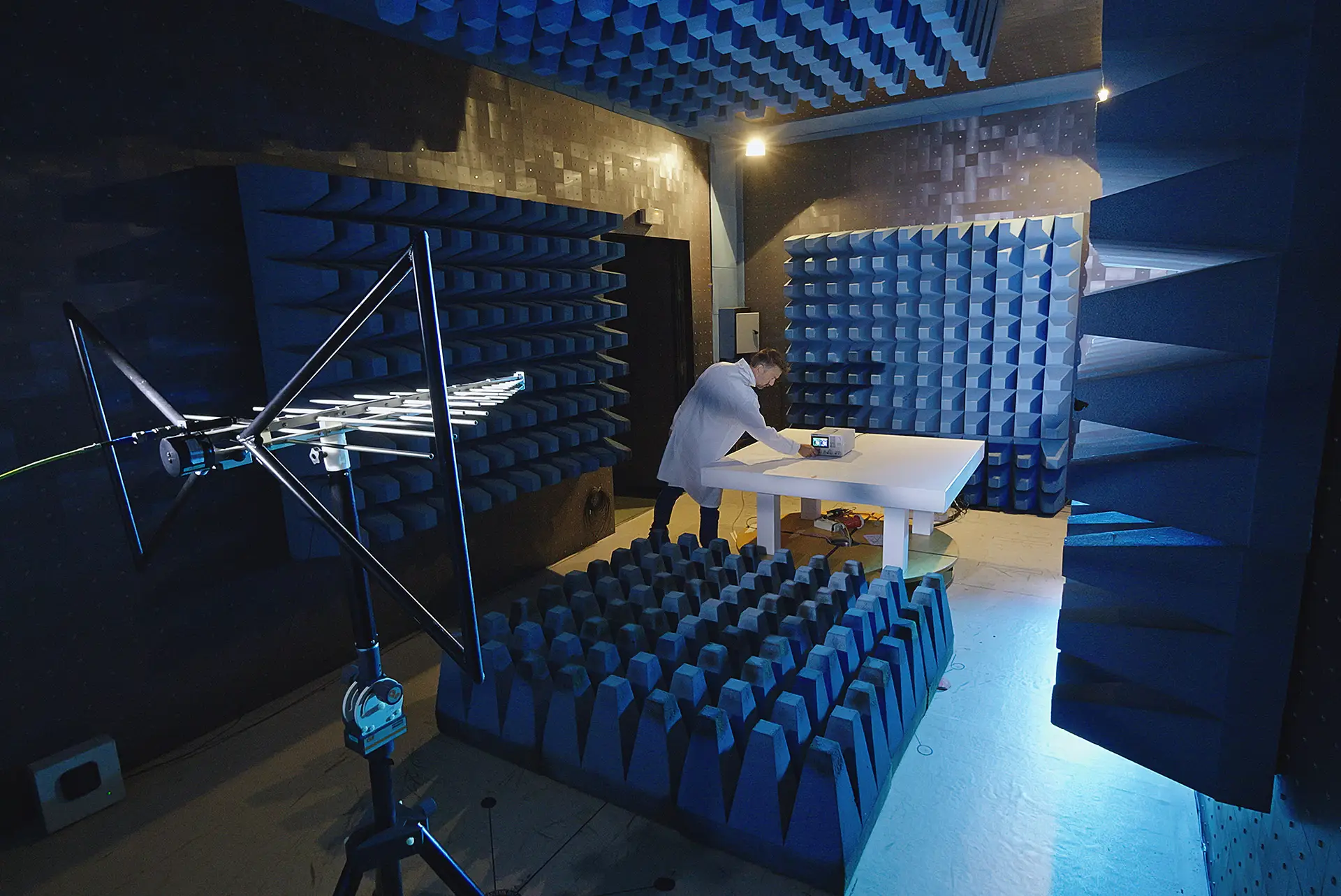
The INTEK laboratory performs tests and measurements in accordance with the main harmonized ETSI regulations and EN standards required by Directive 2014/53/EU (RED):
| Reference standard | Test Description |
|---|---|
| EN 301 489-1 | ElectroMagnetic Compatibility (EMC) standard for radio equipment and services; Part 1: Common technical requirements; Harmonised Standard covering the essential requirements of article 3.1(b) of Directive 2014/53/EU and the essential requirements of article 6 of Directive 2014/30/EU |
| EN 301 489-3 | ElectroMagnetic Compatibility (EMC) standard for radio equipment and services; Part 3: Specific conditions for Short-Range Devices (SRD) operating on frequencies between 9 kHz and 246 GHz; Harmonised Standard covering the essential requirements of article 3.1(b) of Directive 2014/53/EU |
| EN 301 489-17 | ElectroMagnetic Compatibility (EMC) standard for radio equipment and services; Part 17: Specific conditions for Broadband Data Transmission Systems; Harmonised Standard covering the essential requirements of article 3.1(b) of Directive 2014/53/EU |
| EN 303 446-1 | ElectroMagnetic Compatibility (EMC) standard for combined and/or integrated radio and non-radio equipment; Part 1: Requirements for equipment intended to be used in residential, commercial and light industry locations; Harmonised Standard covering the essential requirements of article 3.1(b) of Directive 2014/53/EU |
| EN 303 446-2 | ElectroMagnetic Compatibility (EMC)standard for combined and/or integrated radio and non-radio equipment; Part 2: Specific conditions for equipment intended to be used in industrial locations; Harmonised Standard covering the essential requirements of article 3.1(b) of Directive 2014/53/EU |
| EN 300 220-1 | Short Range Devices (SRD) operating in the frequency range 25 MHz to 1 000 MHz; Part 1: Technical characteristics and methods of measurement |
| EN 300 328 | Wideband transmission systems; Data transmission equipment operating in the 2,4 GHz ISM band and using wide band modulation techniques; Harmonised Standard covering the essential requirements of article 3.2 of Directive 2014/53/EU |
| EN 300 330 | Short Range Devices (SRD); Radio equipment in the frequency range 9 kHz to 25 MHz and inductive loop systems in the frequency range 9 kHz to 30 MHz; Harmonised Standard covering the essential requirements of article 3.2 of Directive 2014/53/EU |
Specialized activities within our INTEK shielded chambers, fully electromagnetically isolated environments essential for the characterization of wireless devices, RF modules, and IoT systems. Each test is designed to verify strict compliance with the essential requirements of the RED Directive 2014/53/EU and harmonized ETSI standards, ensuring that every radio device operates without interfering with other networks and maintains high transmission efficiency.

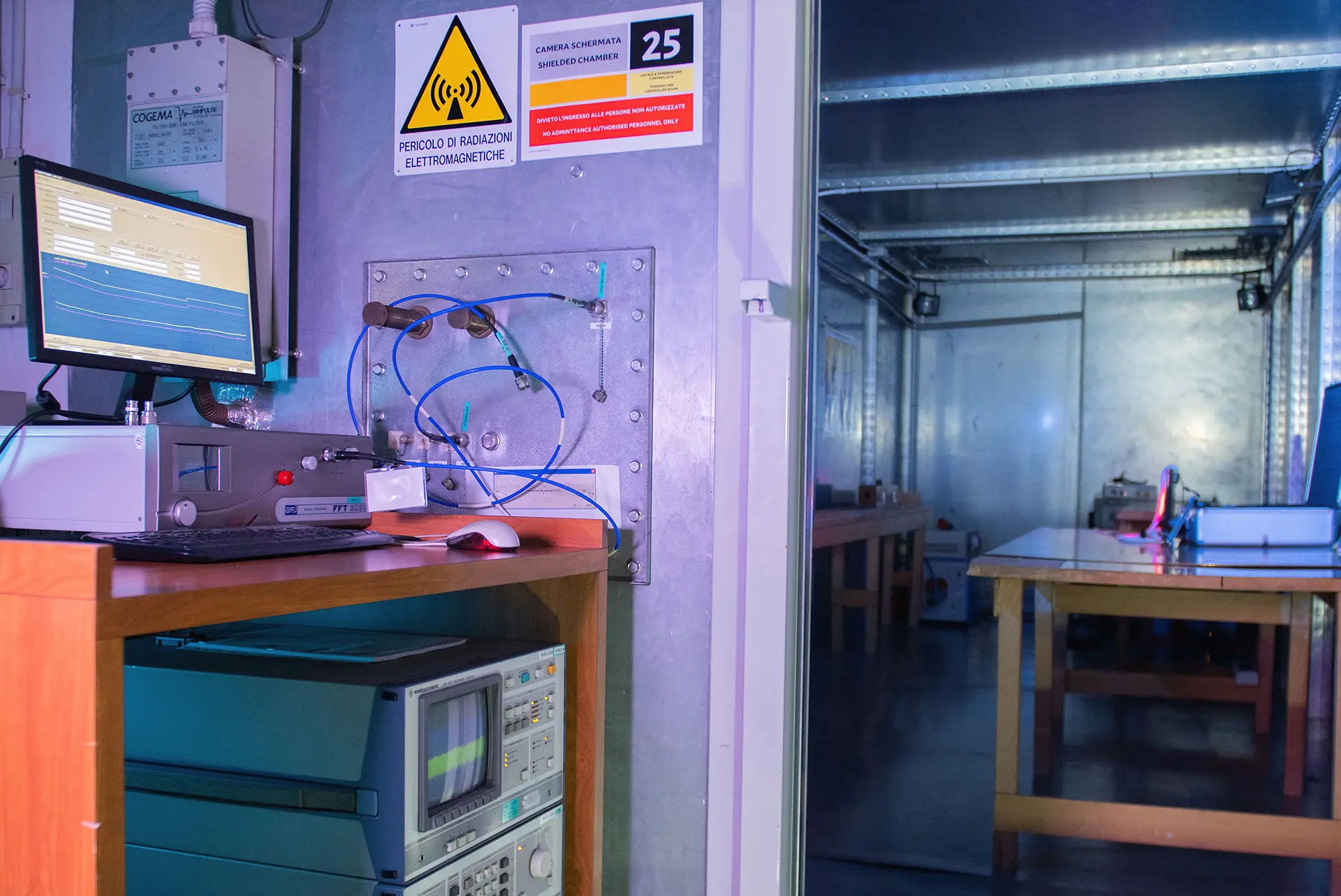

The INTEK laboratory supports customers at every stage of radio qualification, from the verification of precertified modules to the analysis of complex custom systems.
We conduct testing on short-range devices such as remote controls, wireless sensors, electronic keys, and alarm systems. Our analysis focuses on the accuracy of the operating frequency and proper duty cycle management to minimize interference.
We validate the compliance of devices using wideband modulations in the ISM band (2.4 GHz), ensuring that communication protocols do not exceed the power density limits established by international standards.
There is a growing focus on “non-radio” products that integrate a wireless module (e.g., smart home appliances or connected industrial control panels). In these cases, INTEK verifies that the integration of the radio module does not compromise the product’s overall compliance with the applicable safety and electromagnetic compatibility requirements.
The integration of a precertified module does not relieve the manufacturer of responsibility for the product’s final compliance. Manufacturers must verify that the integration complies with the module’s guidelines and that the final product passes the EMC tests specific to combined radio equipment, as required by the EN 303 446 standards.
The RED Directive covers broader essential requirements, including safety and the efficient use of the spectrum. While the EMC Directive limits interference, the RED Directive ensures that radio devices operate without causing harmful interference in frequencies allocated to other services.
Yes, our laboratories are equipped to test a wide range of frequencies in accordance with the aforementioned ETSI standards, from the few kHz of inductive applications up to the GHz frequencies of broadband systems.
Download the service brochure Radio Testing di INTEK.
INTEK supports the customer at every stage of the process: preliminary analysis, selection of standards, development of the test plan, execution of tests, and preparation of technical documentation.
Contact us for technical advice or a customized quote.