Electromagnetic disturbances not identified during the development phase can cause critical malfunctions and interfere with communication services or other equipment. Failure to comply with regulatory limits for conducted and radiated emissions puts companies at risk of failing compliance audits, resulting in commercial launch delays and unpredictable increases in project revision costs.
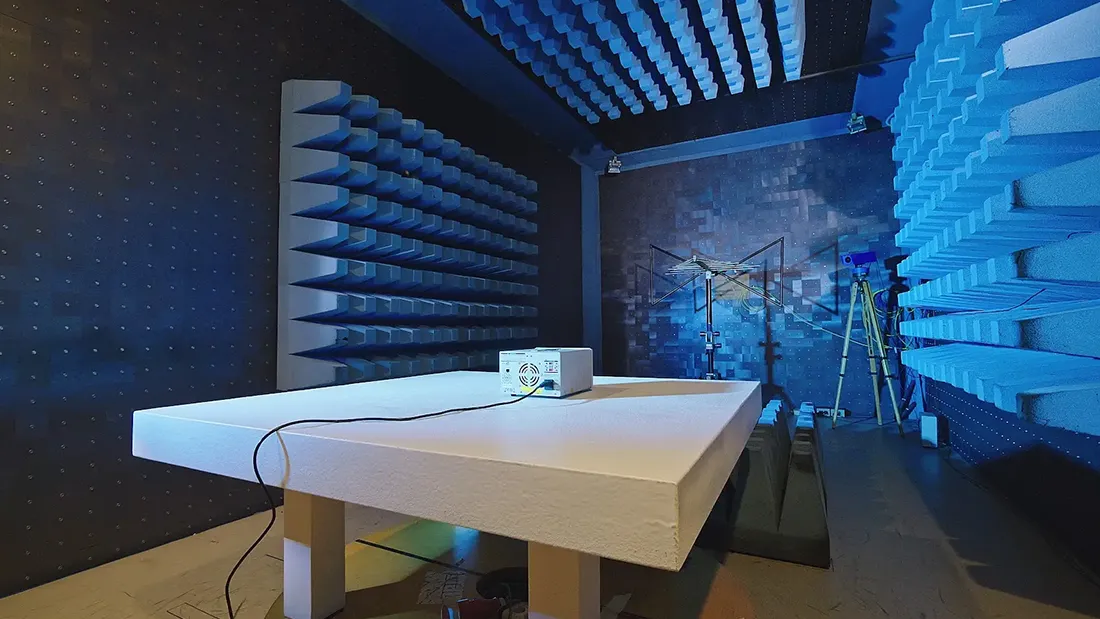
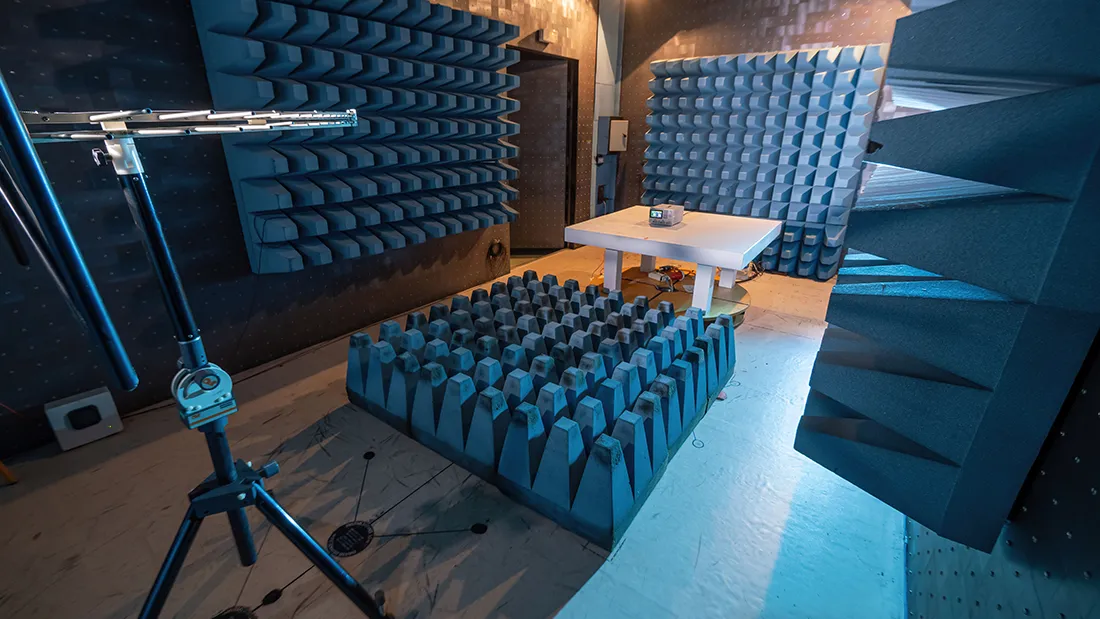
To meet these specific industrial needs, the INTEK EMC laboratory is equipped with dedicated test stations to cover the entire spectrum of measurements required by compliance protocols. Technical laboratory services include emission testing (EMI), aimed at verifying that the disturbances generated by the device—both conducted through power and signal cables and radiated into the surrounding space—strictly fall within the limits established by the standards. This activity is performed using specialized instrumentation, including EMI receivers, LISN networks, and calibrated Bilog and Horn antennas.
In parallel, immunity testing calibrated Bilog and Horn antennas. In parallel, immunity testing is performed to test the product's ability to withstand external interference in the field. Operating sessions simulate the most common electromagnetic phenomena in both domestic and industrial contexts: electrostatic discharge (ESD) with severity levels up to 15-30 kV, fast transients and atmospheric pulses (Burst and Surge), exposure to radio-frequency electromagnetic fields (radiated and conducted immunity), and resistance to power-frequency magnetic fields.
Identifying the device's tolerance limits and emissions in advance guarantees a concrete economic advantage for companies, avoiding costly post-production modifications and ensuring the full reliability of the final product.